Downtown and California Avenue
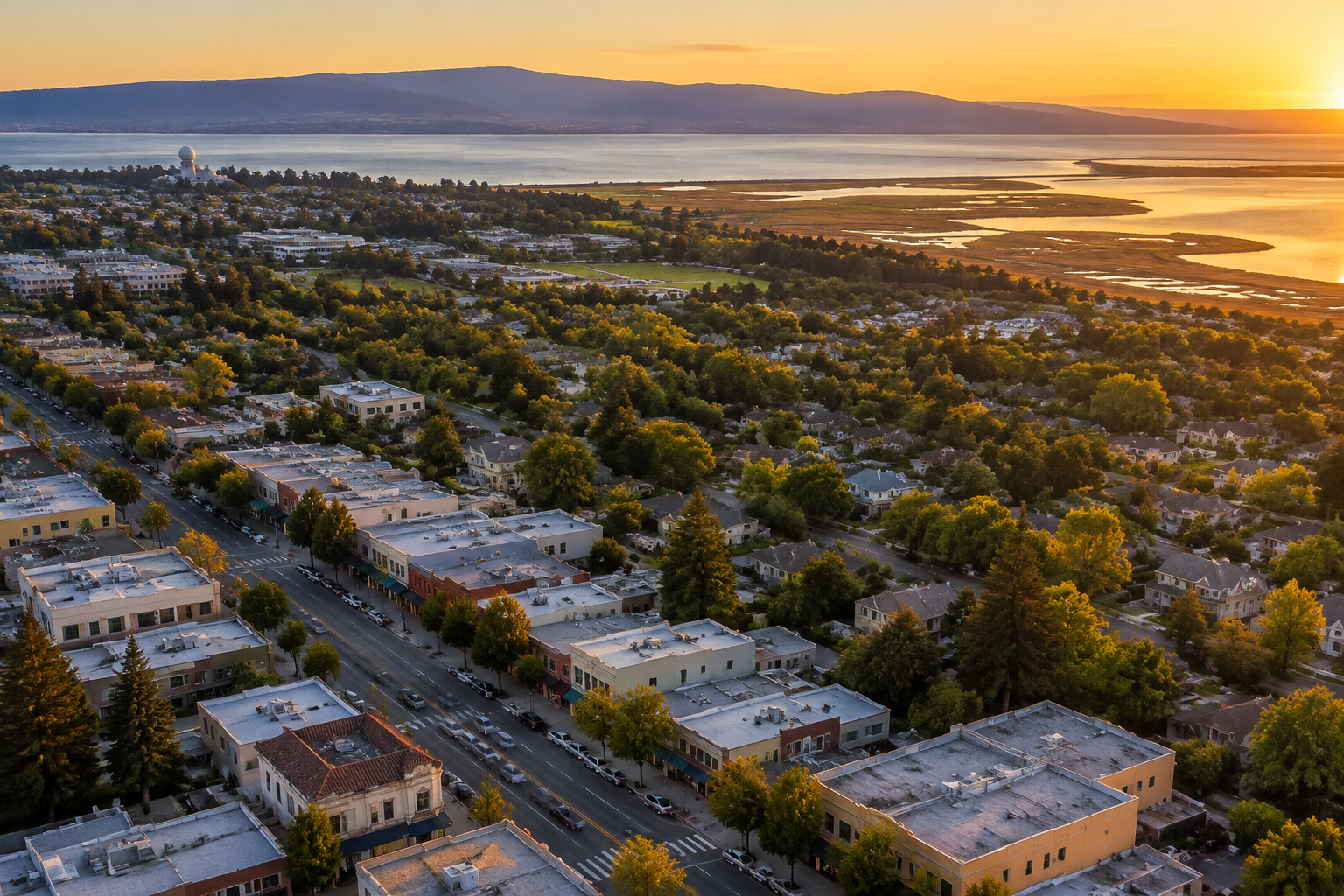
University Avenue anchors the main downtown, while California Avenue offers a second, smaller commercial district with its own farmers market and restaurants.
Silicon Valley community guide
Mature, tree-lined neighborhoods near Stanford, with architectural variety, a lively downtown, and Peninsula access.
Overview
Palo Alto sits at the northwestern corner of Santa Clara County, where the valley meets the Peninsula. It borders Menlo Park to the north, Mountain View to the south, and Los Altos Hills to the southwest, with the Stanford University campus along its western side. Highway 101 runs along its eastern edge and I-280 to the west, with Caltrain stations downtown and at California Avenue.
Living in Palo Alto
University Avenue anchors the main downtown, while California Avenue offers a second, smaller commercial district with its own farmers market and restaurants.
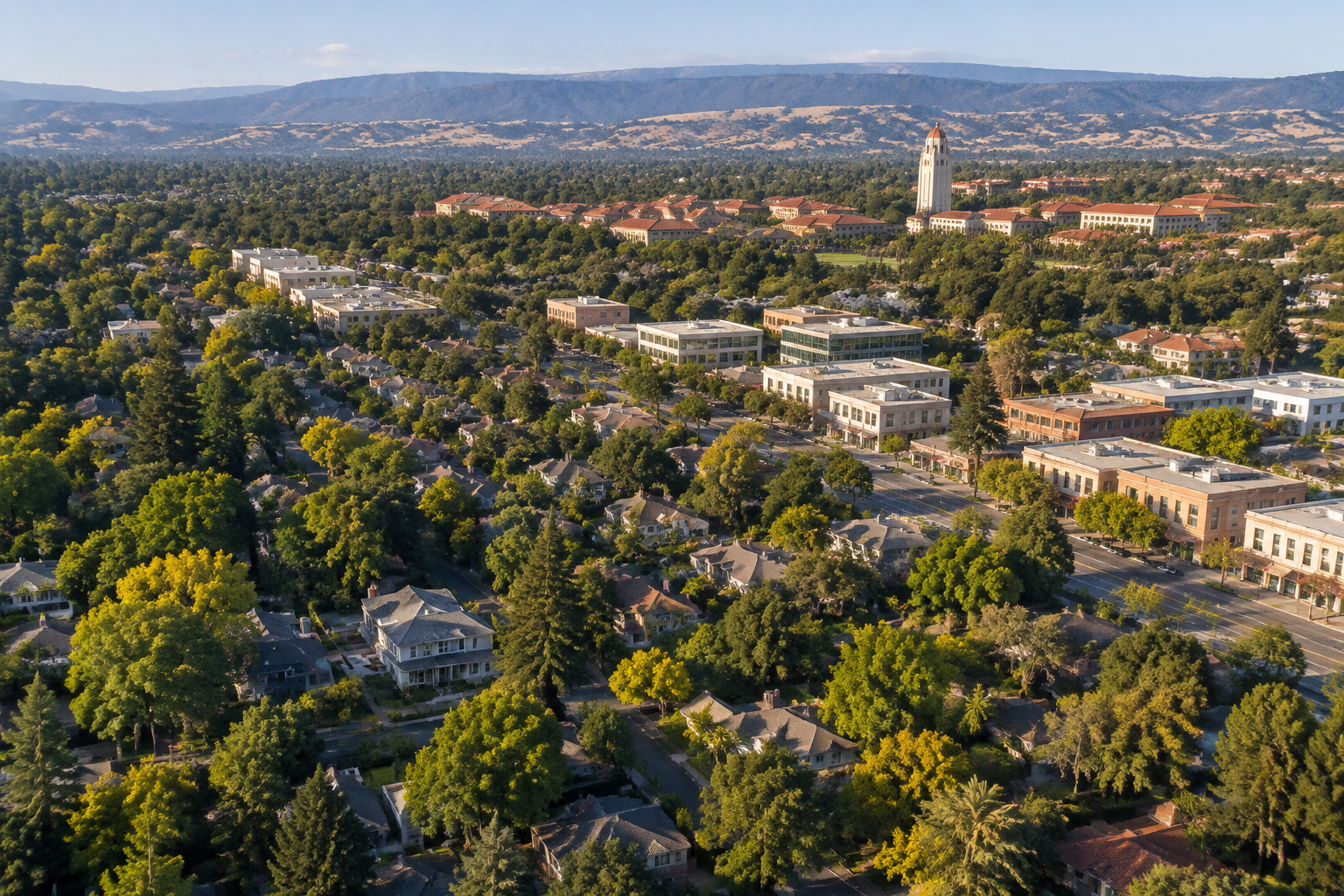
Palo Alto's residential areas are known for mature trees, established gardens, and streets that have settled over a century of growth.
The city's housing spans early Craftsman and period revival homes, mid-century Eichlers, ranch homes, and contemporary rebuilds — often on the same street.
The Stanford campus, its open space, and the foothill preserves to the west shape the city's setting and provide extensive trails.
Palo Alto is one of the most competitive markets in the region. Entry prices are high, inventory is limited, and many buyers weigh nearby alternatives in Menlo Park, Mountain View, and Los Altos.
Housing
Explore the neighborhoods
Before you buy
Desirable listings often draw multiple offers. Preparation on financing, disclosures, and your own limits matters before you offer.
Some homes carry historic designations or sit in historic districts, which can affect exterior changes. Confirm before planning work.
City review processes shape what's realistic on a given lot. Understand them before buying with major project plans.
This is general context, not tax, legal, or insurance advice. Confirm jurisdiction, permits, HOA terms, and coverage for any specific property with the appropriate professionals.
Parks, trails & amenities
Foothills Nature Preserve and the baylands offer trails at both edges of the city.
A well-known hill trail on Stanford land southwest of the city.
Parks and community spaces are distributed throughout the city's neighborhoods.
Getting around
Two stations — downtown and California Avenue — provide service up the Peninsula to San Francisco and south to San Jose.
101 runs along the eastern edge; I-280 to the west connects toward San Francisco and the south valley.
Menlo Park borders to the north and Mountain View to the south; Los Altos and Los Altos Hills are immediately southwest.
Highway 84 connects east across the bay to the East Bay.
Drive times in Silicon Valley change sharply with time of day — test your actual commute before committing.
Palo Alto, Menlo Park, and Mountain View are often considered together. The tradeoffs usually come down to budget, housing type, and which downtown or commute pattern fits your week.
Let's talk through your options.